
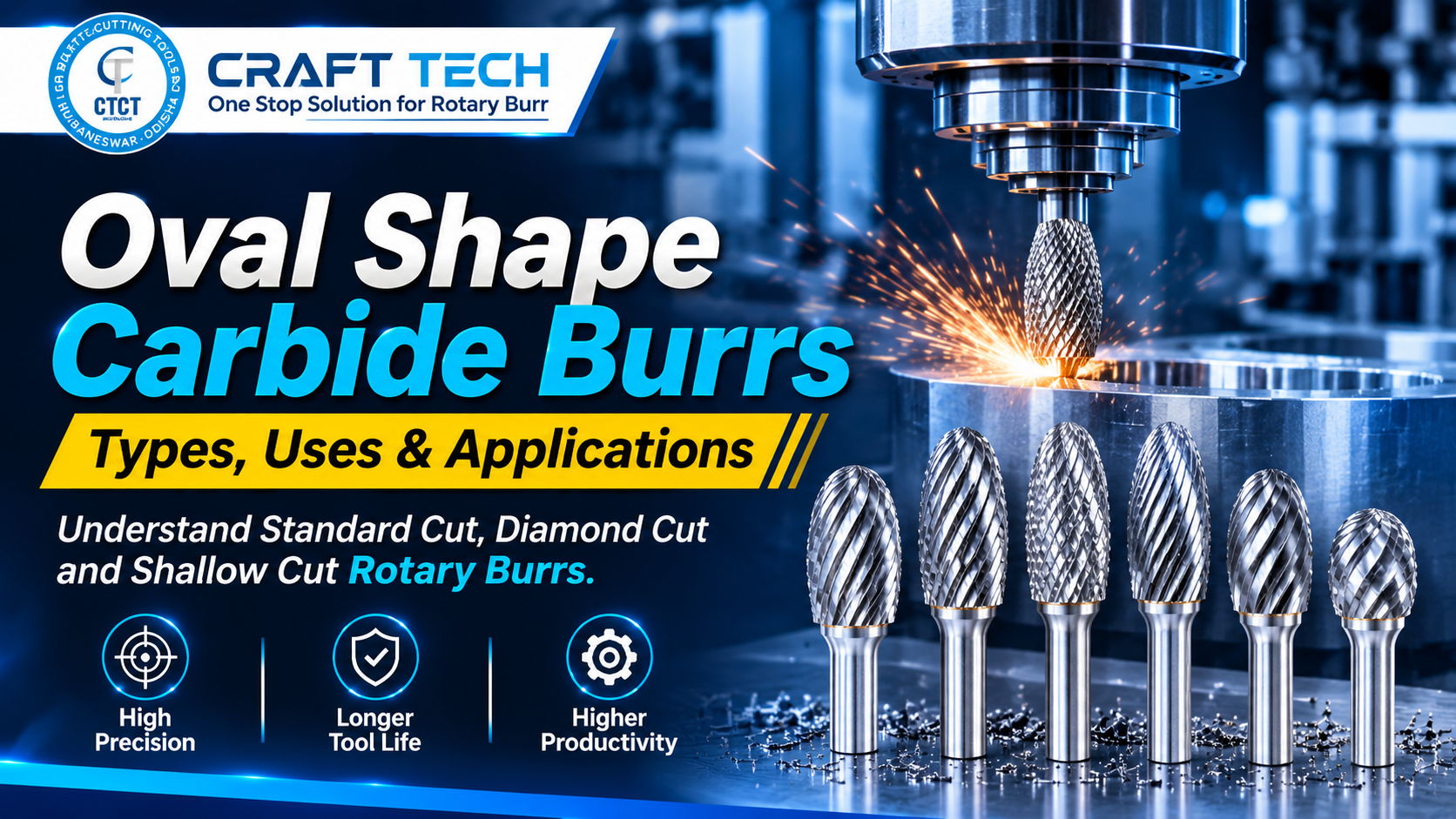
An Oval Shape Carbide Burr is an essential rotary cutting tool for achieving precision, smooth finishing and consistent results in metalworking. Used in various industrial applications, these tungsten carbide rotary burrs help with deburring, shaping curved surfaces and removing unwanted material. However, choosing the right cutting pattern can sometimes be confusing. Understanding the different types of oval carbide burrs can help you select the right tool for your specific application.
One popular option in industrial applications is the Oval Shape Carbide Burr. Known for its rounded head profile, this rotary cutting tool is useful for shaping curved surfaces, removing unwanted material, deburring and refining metal components.
But did you know that the cutting pattern also affects how a carbide burr performs?
Standard Cut, Diamond Cut and Shallow Cut oval burrs have different cutting geometries. Understanding these differences can help you select the right tool for your application.
In this guide, we will explain the different types of oval carbide burrs, their applications, selection factors and important considerations when purchasing tungsten carbide rotary burrs.
What Is an Oval Shape Carbide Burr?
An oval shape carbide burr is a rotary cutting tool featuring an elongated, rounded cutting head. It is commonly manufactured using tungsten carbide, a hard and wear-resistant material suitable for various industrial machining and finishing applications.
These tools are generally used with compatible die grinders and rotary machines. During operation, their cutting edges remove material from the workpiece to achieve the required shape or surface condition.
The oval head design makes these burrs useful for working on curved surfaces and rounded contours.
Some common applications include:
- Metal deburring and edge cleaning.
- Shaping curved surfaces.
- Removing unwanted material.
- Refining irregular metal edges.
- Surface preparation and finishing.
- Working on contoured components.
When choosing a burr cutter tool, consider the workpiece material, cutting pattern, dimensions and required finish.
Different Types of Oval Shape Carbide Burrs
Although these three tools share an oval-shaped head, their cutting patterns are different. Each pattern has its own characteristics and should be selected according to the application.
1. Standard Cut Oval Carbide Burr
The Standard Cut oval carbide burr features a single-direction spiral flute pattern. Its cutting edges provide a conventional cutting action for general-purpose material removal.
Main characteristics:
- Single-direction spiral cutting pattern.
- Suitable for general-purpose cutting.
- Useful for deburring and edge cleaning.
- Helps remove unwanted material.
- Suitable for various compatible metalworking applications.
Common applications:
Standard Cut rotary burrs can be considered for suitable steel, cast iron and other compatible materials. They are useful for general shaping, removing excess material and cleaning metal edges.
When should you choose it?
Choose a Standard Cut oval burr when your application involves regular deburring, general material removal or shaping operations.
2. Diamond Cut Oval Carbide Burr
The Diamond Cut oval carbide burr features intersecting cutting grooves that create a cross-pattern arrangement.
This cutting geometry helps break removed material into smaller chips compared with a conventional single-cut pattern.
Main characteristics:
- Cross-pattern cutting geometry.
- Smaller chip formation.
- Controlled material removal.
- Suitable for selected finishing and deburring operations.
- Useful for different compatible metalworking applications.
Common applications:
Diamond Cut tungsten carbide rotary burrs can be used for selected steel, cast iron and other compatible materials. The exact material suitability depends on the carbide grade and cutting geometry.
When should you choose it?
Consider Diamond Cut when your application requires the characteristics of a cross-cut pattern and controlled material removal.
3. Shallow Cut Oval Carbide Burr
The Shallow Cut oval carbide burr features comparatively shallow cutting grooves. The groove depth and tooth arrangement influence how the cutting edges engage with the workpiece.
Main characteristics:
- Shallow cutting groove arrangement.
- Different cutting engagement from deeper flute patterns.
- Suitable for selected shaping applications.
- Can be considered for controlled surface work.
Common applications:
Depending on its design, a Shallow Cut burr may be suitable for selected shaping, edge refinement and surface-finishing operations.
When should you choose it?
Consider this cutting pattern when its specific groove geometry matches your material-removal and finishing requirements.
Remember that a shallow cut does not automatically guarantee a finer finish. Material type, operating speed, pressure and tool geometry also influence the result.
Standard Cut vs Diamond Cut vs Shallow Cut: Which One Should You Choose?
Understanding the difference between rotary burr cutting patterns can make tool selection easier.
| Feature | Standard Cut | Diamond Cut | Shallow Cut |
|---|---|---|---|
| Cutting pattern | Single spiral | Cross-pattern | Shallow grooves |
| Chip formation | Conventional | Smaller chips | Depends on geometry |
| Main consideration | General material removal | Cutting control | Cutting engagement |
| Typical application | Deburring and shaping | Selected deburring and finishing | Selected surface and shaping work |
The best option depends on your actual working requirements. Always check the manufacturer’s product specifications before selecting a cutting tool.
What Are Tungsten Carbide Rotary Burrs Used For?
Tungsten carbide rotary burrs are widely used in industrial machining, fabrication and metalworking because of their hardness and wear resistance.
They help operators perform different cutting and finishing operations with compatible rotary equipment.
Some important applications include:
1. Metal Deburring
Metal components often develop sharp edges after drilling, cutting or machining. A suitable rotary burr helps remove unwanted material and refine these edges.
2. Surface Shaping
Different burr head shapes allow operators to work on specific profiles and contours. Oval burrs are particularly useful for selected curved and rounded surfaces.
3. Weld Refinement
In compatible fabrication applications, rotary burrs can help remove excess material and refine selected weld areas.
4. Edge Finishing
Carbide burrs help refine irregular edges and improve the surface condition of suitable metal components.
5. Precision Metalworking
When working on complex metal components, selecting the correct burr shape and cutting pattern can support controlled material removal.
How to Choose the Right Burr Cutter Tool for Your Application
If you are searching for a burr cutter tool in India, understanding the product specifications is important before making a purchase.
Here are five factors to consider.
1. Identify Your Workpiece Material
First, identify the material you need to work on.
Common materials include:
- Mild steel.
- Stainless steel.
- Cast iron.
- Aluminium.
- Other compatible metal alloys.
Different materials require different cutting geometries. Always select a burr according to the manufacturer’s material recommendations.
2. Understand Your Cutting Requirements
Identify what you want the tool to achieve.
Do you need heavy material removal, general deburring, edge cleaning or surface refinement?
Your working requirement will help you shortlist the correct cutting pattern.
3. Select the Correct Burr Shape
Rotary burrs are available in different head shapes for different applications.
For example:
- Oval shape burrs are useful for selected curved and contoured surfaces.
- Cylindrical burrs are suitable for specific flat and straight-profile operations.
- Cylindrical burrs with end cut can help with cutting at the end face.
- Cylindrical burrs with radius end feature a rounded end profile.
Choosing the correct shape can make your machining and finishing work more convenient.
4. Check the Burr Dimensions
Before purchasing tungsten carbide rotary burrs, check:
- Head diameter.
- Head length.
- Shank diameter.
- Overall tool length.
The dimensions should be compatible with your machine and the available working space.
5. Consider the Required Surface Finish
Not every cutting tool produces the same surface result.
Consider the material, cutting geometry and finishing requirement before choosing your burr. For certain applications, you may also need a separate finishing operation.
Why Choosing the Right Rotary Burr Manufacturer Matters
When purchasing industrial cutting tools, product selection is only one part of the decision. The manufacturer also matters.
A reliable cutting tool manufacturer should provide clear product specifications, consistent manufacturing standards and suitable product guidance.
Before selecting a rotary burr manufacturer in India, consider:
- Product range and available burr shapes.
- Cutting pattern options.
- Product dimensions and specifications.
- Material compatibility information.
- Manufacturing quality and consistency.
- Technical assistance and customer support.
These factors help buyers make informed purchasing decisions instead of selecting a tool based only on its appearance or price.
Safety Tips for Using Tungsten Carbide Rotary Burrs
Proper handling is essential when operating rotary cutting tools.
Follow these basic safety practices:
- Wear suitable eye protection and personal protective equipment.
- Inspect the burr before every use.
- Check that the shank is securely fitted.
- Follow the recommended operating speed.
- Avoid applying excessive pressure.
- Do not use damaged or worn-out burrs.
- Keep the cutting edges moving during operation.
- Follow the machine manufacturer’s safety instructions.
Using the correct tool and following safe operating practices can help improve performance and reduce unnecessary tool damage.
Find the Right Rotary Burrs with Craft Tech Cutting Tools
Finding the right industrial cutting tool becomes easier when you understand your application and product requirements.
At Craft Tech Cutting Tools, we focus on providing rotary burr solutions for different industrial cutting, shaping and finishing requirements.
From oval shape carbide burrs to different cylindrical burr profiles, selecting the correct tool is important for achieving the desired results.
As a cutting tool manufacturer, our focus is on precision, durability and reliable performance.
Whether you are looking for tungsten carbide rotary burrs, an oval carbide burr or other specialised burr cutter tools in India, understanding the product specifications is the first step towards making the right choice.
Craft Tech Cutting Tools – One Stop Solution for Rotary Burrs.
For product enquiries and assistance:
Website: https://crafttechcuttingtools.com/
Phone: +91 88955 74279
Frequently Asked Questions (FAQs)
1. What are tungsten carbide rotary burrs?
Tungsten carbide rotary burrs are cutting tools made using tungsten carbide material. They are commonly used for metal deburring, shaping, material removal and finishing operations.
2. What is an oval shape carbide burr used for?
An oval shape carbide burr is used for deburring, shaping curved surfaces, edge cleaning and refining contoured metal components.
3. What is the difference between Standard Cut and Diamond Cut rotary burrs?
Standard Cut burrs feature a single-direction spiral flute pattern, whereas Diamond Cut burrs have intersecting cutting grooves. Their different geometries influence chip formation and cutting behaviour.
4. Which carbide burr is suitable for steel?
The suitable burr depends on the type of steel, carbide grade and cutting geometry. Always check the manufacturer’s recommendations before selecting a tool.
5. What are cylindrical burrs with end cut?
Cylindrical burrs with end cut have a cylindrical head profile with cutting edges on the end face. They are used for selected machining, shaping and material-removal operations.
6. What are cylindrical burrs with radius end?
Cylindrical burrs with radius end feature a rounded end profile. They are useful for applications where the workpiece requires a rounded tool-end profile.
7. How do I select a rotary burr manufacturer in India?
Compare the manufacturer’s product range, specifications, available cutting patterns, manufacturing consistency and customer support before making a purchasing decision.
8. How long do tungsten carbide rotary burrs last?
Tool life depends on the workpiece material, operating speed, pressure, cutting conditions and maintenance. Correct tool selection and handling can help improve service life.
9. Where can I find industrial rotary burrs in India?
You can explore industrial rotary burr options from specialised cutting tool manufacturers such as Craft Tech Cutting Tools. Check the product specifications to find a suitable option for your application.
Select the right Oval Shape Carbide Burr for your industrial application with Craft Tech Cutting Tools.